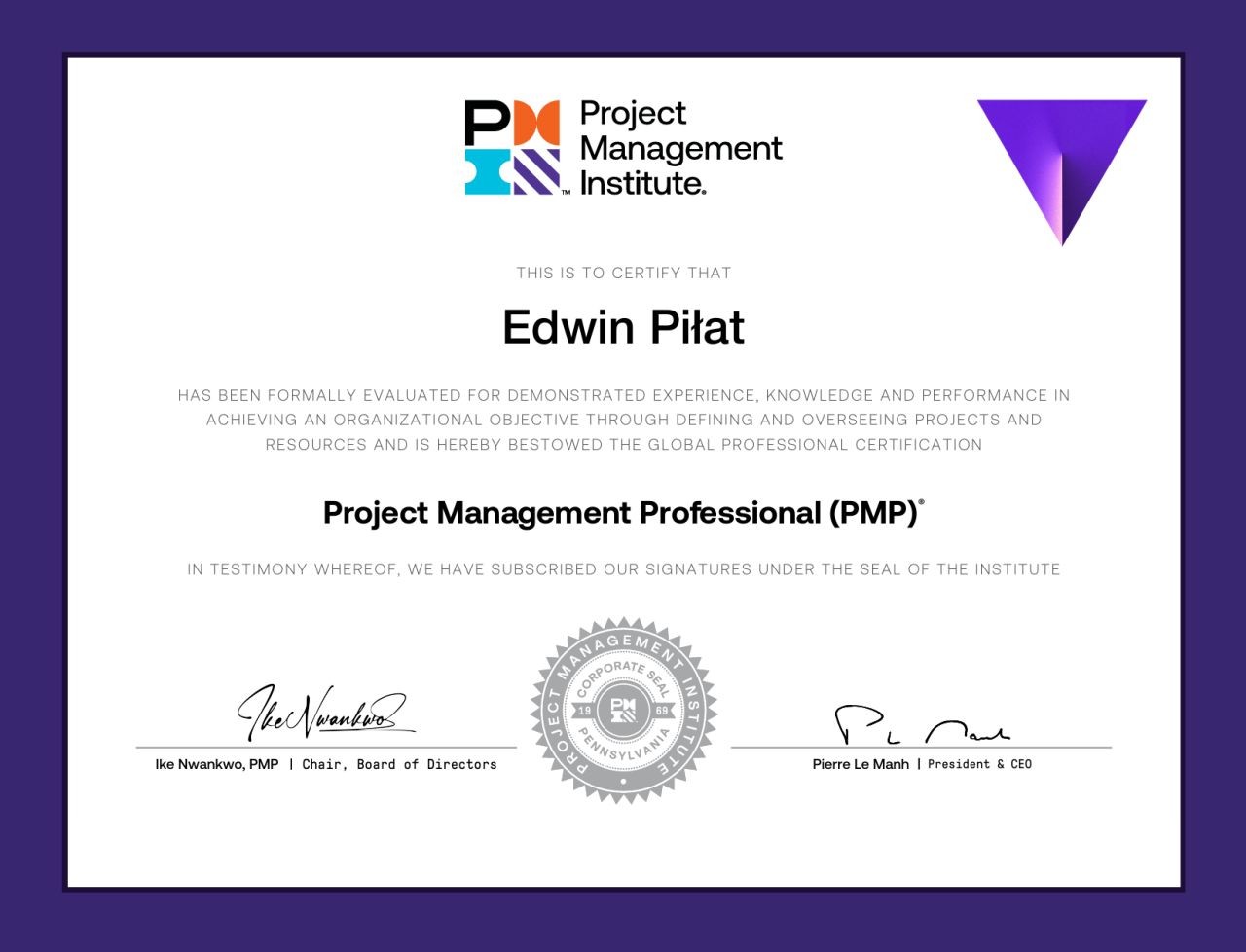
Why PMP
Day to day, I lead a team that develops a game engine and ships one release after another. I knew Scrum and Agile from practice, but I wanted to structure my knowledge of project management more broadly: from planning and risk to stakeholders and budget. PMP covers predictive as well as agile and hybrid approaches — and that mix is exactly what I deal with in game production.
The exam in numbers
- 180 questions and just under 4 hours to answer them,
- about half of the questions cover agile and hybrid approaches,
- to sit the exam, you need documented experience leading projects and 35 hours of training,
- the certification is valid for 3 years — mine until 2028 — and renewing it means continuing to learn and earning PDUs.
How I prepared
My preparation took six months. In that time I went through three courses and answered more than 2,000 practice questions. The questions turned out to be key: the PMP exam tests not so much whether you know the definitions, but whether you can choose the best action in a specific situation.
What worked and what I wouldn't repeat
The most important lesson: consistency beats last-minute cramming. Six months is a long time, so what mattered was a steady study rhythm alongside work and everyday life.
What it gave me at work
PMP didn't change the way I lead my team overnight. What it gave me is a shared language and structured tools for conversations about scope, risk and priorities — with developers and with the business alike.
This post expands on my LinkedIn post ↗.