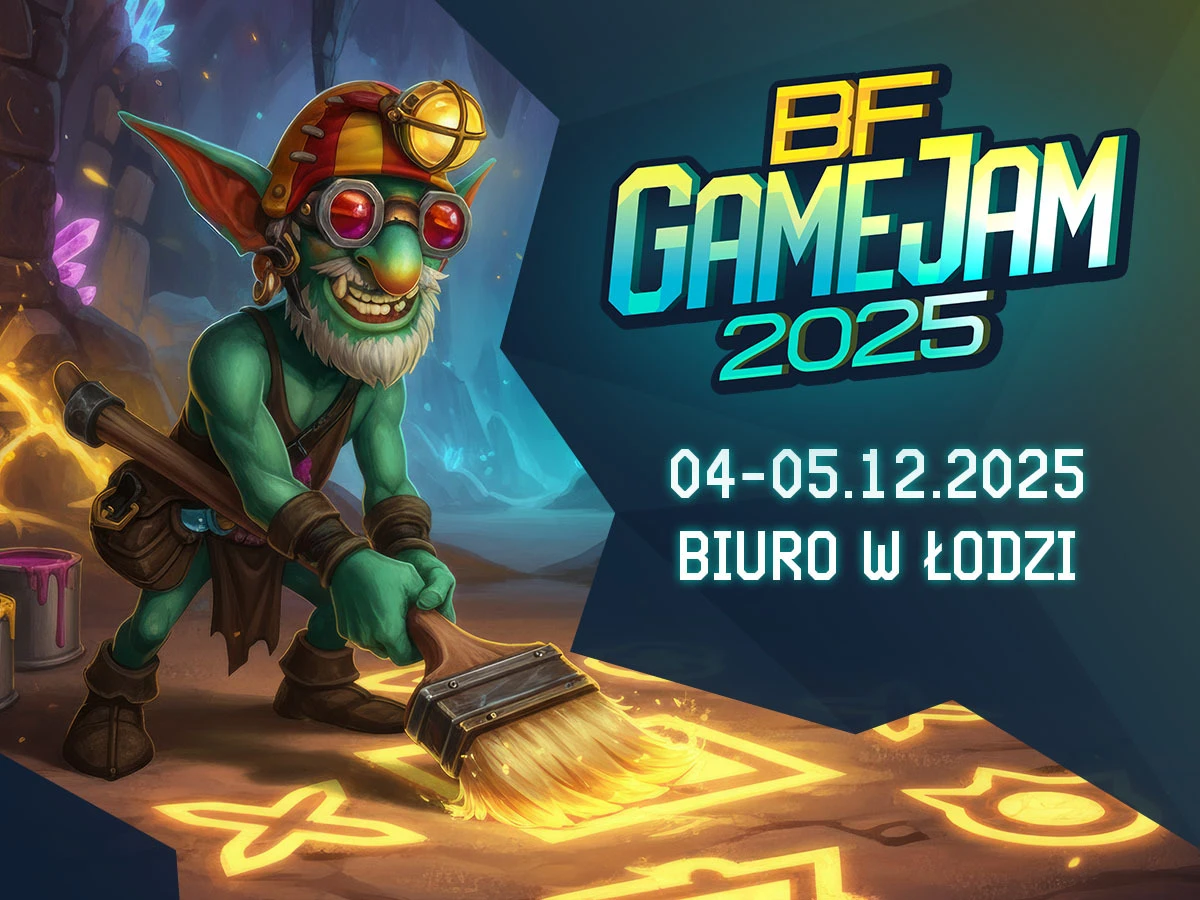
Day to day, we work to a production rhythm: sprints, releases, one launch after another. The Game Jam was meant to be a break from that rhythm — two days for teams to try out their own ideas, new tools, and working with people they don't usually share a project with.
The rules
The framework was simple, but demanding:
- a game of chance, built around rounds,
- no copying of well-known, obvious formats — a fresh idea was what counted,
- any technology, framework and engine,
- any assets: from our games, open source, or your own if time allowed,
- using AI tools was encouraged.
At the end, every team presented a working prototype — ideally one the jury and the audience could play themselves, for example by scanning a QR code with their phone.
The result
Small teams built playable games from scratch in just over twenty hours — with art, sound and levels. And that was before the latest AI models were released.
Those games looked good, sounded good, had levels and, above all, were playable.
What I took away
The Game Jam showed how much a team can do when it gets a clear framework, freedom to choose its tools and a short, concrete deadline. It's something I bring into everyday work: less imposing of solutions, more room for people's ideas.
I also talked about the Game Jam during a panel discussion at an industry congress — read more in “The release race and AI in game production”.